
Greenville, SC
Land Clearing Services in Greenville, SC
Clearing land is not the same thing as cutting down trees. That confusion costs property owners more money than almost anything else in site work, because the trees are the visible part and the roots, the stumps, the grade, and the drainage are the part that decides whether anything you build afterward stands still. A lot of things look finished badly. It just does not behave like it. Anyone comparing land clearing contractors in Greenville, SC, is really comparing what happens after the chainsaws stop.
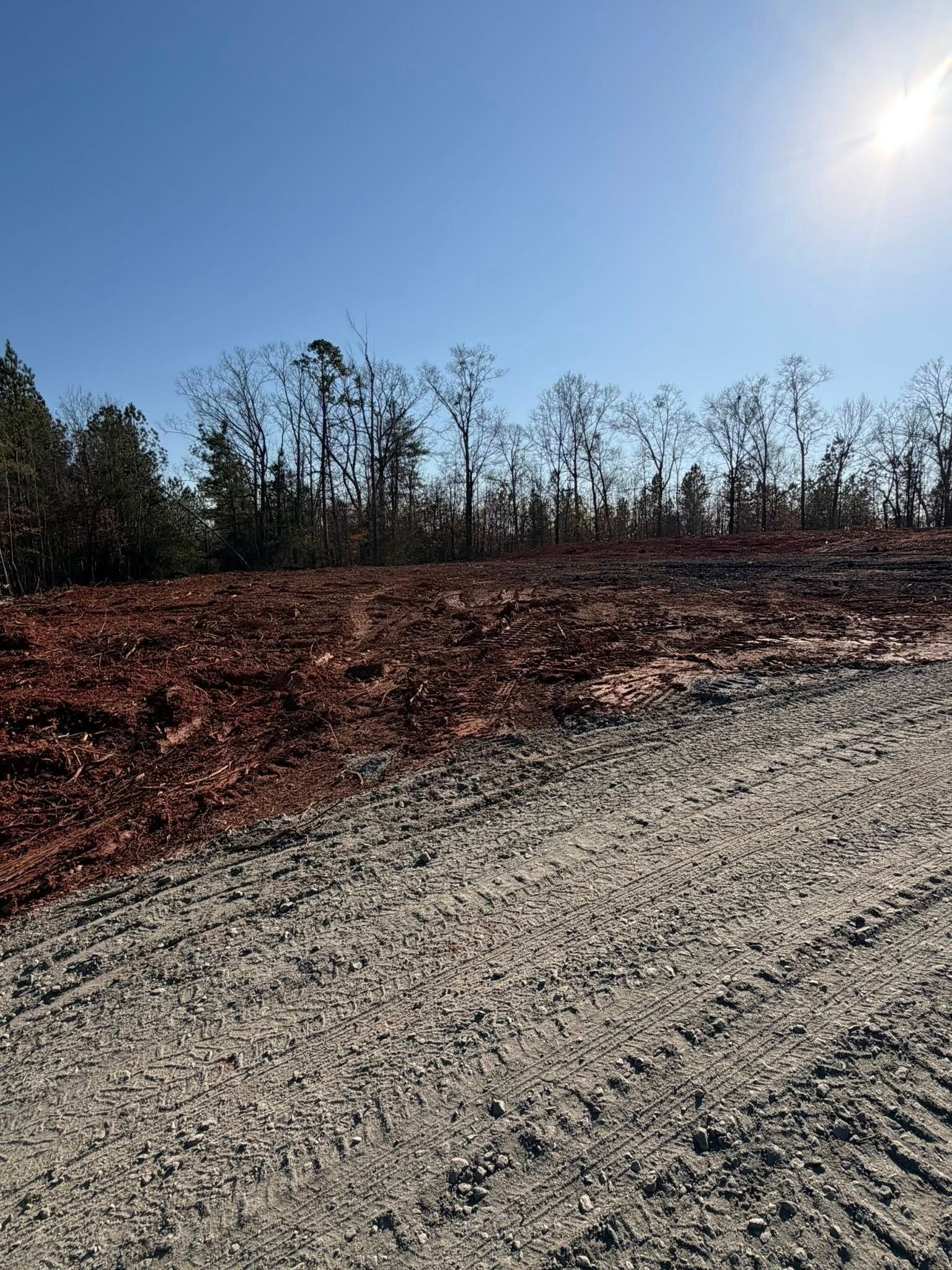
The rain here settles the argument. Greenville, SC receives 47.2 inches of precipitation in an average year, and the city sits in the foothills of the Blue Ridge Mountains, ground that is full of small hills. Strip the vegetation off a slope in a wet place, and you have started a clock. Bare soil on a grade does not stay where you left it, and what leaves the site ends up in a ditch, a neighbor's yard, or the Reedy River running through the middle of town. Professional lot clearing and site prep in Greenville, SC, has to answer for the soil they expose.
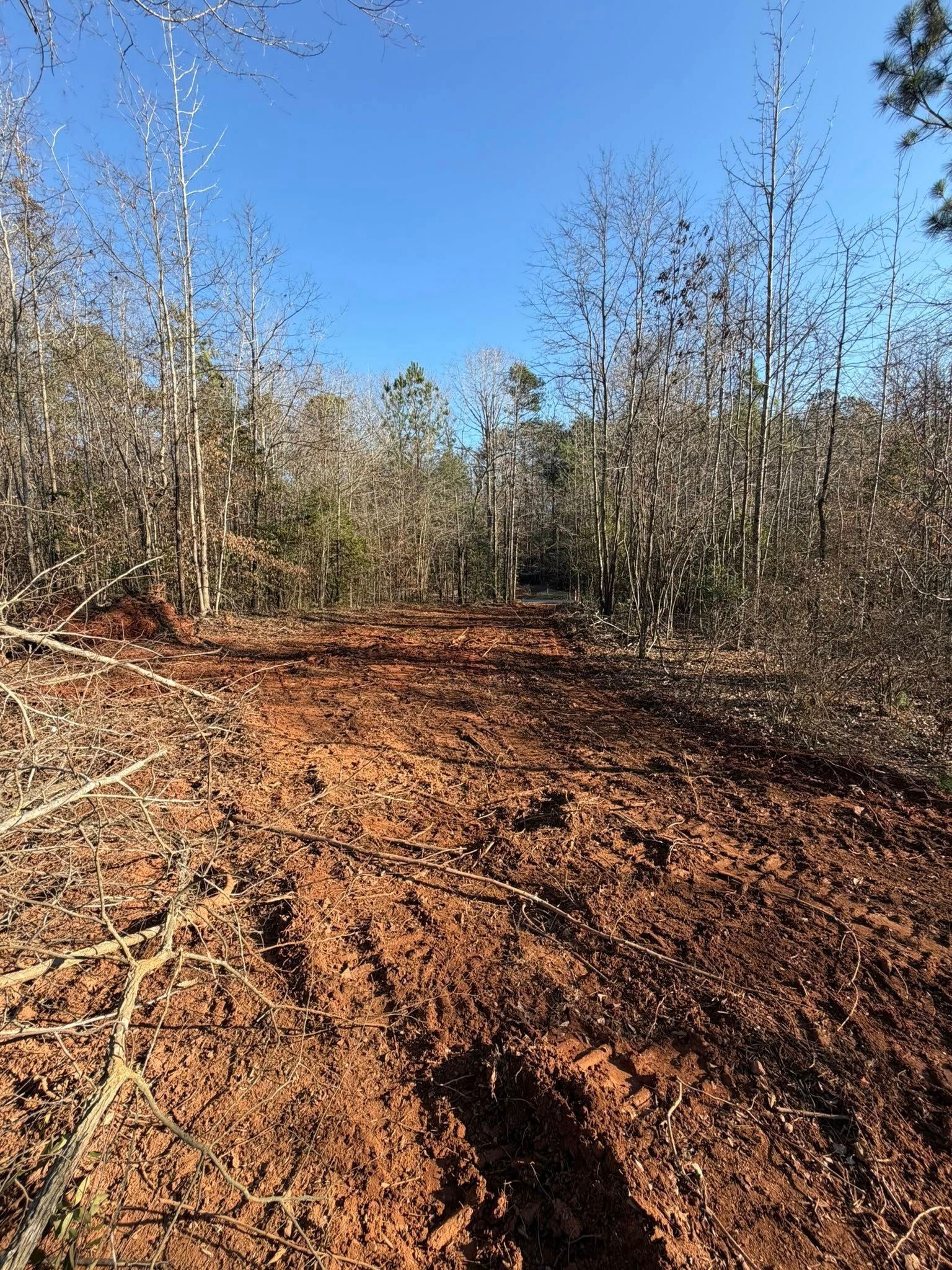
JP Grading has been doing this work for over 15 years. We clear residential lots, commercial sites, agricultural land, and rural tracts, and we do it selectively, taking out what has to go while preserving key trees and the natural drainage patterns that are already doing half the work for you. We handle the debris hauling and the site cleanup, too. Show us the property, and we will tell you what it needs.
About Greenville, SC
Greenville, SC, is the county seat of Greenville County and the sixth-most populous city in South Carolina, with a population of 70,720 at the 2020 census and a metropolitan area of roughly 997,000 people, the largest in the state. The city was established in 1797 and incorporated in 1831.
Falls Park on the Reedy, dedicated in 2004, sits in the heart of downtown and holds the Liberty Bridge, a pedestrian suspension bridge that curves out over the falls of the Reedy River. Furman University has been here since 1851, when it was brought to Greenville from Winnsboro.
The city covers 30.02 square miles, of which 29.80 square miles is land, and it lies in the foothills of the Blue Ridge Mountains, which means a landscape of many small hills. The Reedy River, a tributary of the Saluda, runs directly through the center of the city, and Greenville, SC averages 47.2 inches of precipitation a year.
The Erosion Clock Starts the Day the Land Is Cleared
Forty-seven inches of rain a year is a great deal of water to land on a hillside. Vegetation is what normally handles it. Leaves and branches break the fall of the raindrops, roots hold the soil particles together, and the litter layer on the ground slows the water down enough for it to soak in rather than run off.
Take all of that away at once and the mechanism reverses. Raindrops hit bare soil at full speed and knock particles loose, a process that starts the moment the rain does. Water then sheets across the exposed surface, picking up those loose particles, and as it concentrates it cuts rills, and rills become gullies. On a Blue Ridge foothill slope this can happen inside a single heavy storm, and topsoil that took centuries to build leaves in an afternoon.
The consequence is real, and it is expensive: lost topsoil, silted-up drainage, and a site that has to be repaired before it can be used. The right approach is to clear what actually needs clearing, keep the trees and root systems that are holding a slope together, and respect the drainage lines that are already there. That is how JP Grading clears a property, and it is why we do not simply push everything into a pile.
Our Services in Greenville, SC
Stump Grinding or Full Root Removal: They Are Not the Same Job
A stump grinder takes a stump down to somewhere around 6 to 12 inches below the surface and turns it into chips. That is usually all a homeowner needs, and it is the cheaper option. What it does not do is remove the root ball or the lateral roots, which stay in the ground and slowly rot.
Here is where people get caught out. If you are grinding a stump so you can grow grass over it, the leftover roots are irrelevant. If you are putting a foundation, a driveway, a slab, or a shed over that same spot, they are the whole problem, because organic matter decomposes and what it leaves behind is a void. Fill settles into that void, and the settlement shows up as a dip in the driveway or a crack in the slab two or three years after the concrete was poured and everyone has forgotten there was ever a tree there.
The right call is to decide what is going on top of the surface before you decide how deep to take the stump out of it. Grinding for landscaping, full root removal under anything structural. JP Grading asks what the land is for before we touch it, because that answer changes the method.
Why Greenville Residents Trust JP Grading
We clear selectively, and that is a deliberate choice rather than a slower one. Removing only the vegetation that genuinely needs to go keeps the root network on your slopes intact, keeps the site draining the way it has always drained, and leaves you with a property that is ready to build on instead of one that needs remediation first.
Over 15 years the single most common repair job we see is a site that was cleared with the wrong equipment. Heavy machinery run carelessly over wet clay compacts the subsoil into something close to pavement, and compacted soil does not absorb water. It sheds it. So a lot cleared for construction ends up draining worse than it did under trees. Equipment selection and timing matter as much as the clearing.
We remove the trees, the stumps, the underbrush, and the debris, and we haul it away so the site is genuinely finished rather than merely flattened. Whether it is a residential lot, a pasture, a commercial site, or a storm-damaged property in Greenville, SC, we will walk it with you first.
Hire Us! Land Clearing Services in Greenville, SC
Book the walk before you book the equipment. That is the part of this job that costs nothing and saves the most, because half of what people plan to have cleared turns out to be doing something useful, and the other half turns out to be hiding something they did not know about. An experienced land clearing company in Greenville, SC should be able to tell you both in about an hour on the property.
Then we scope it honestly. Which trees stay, which go, where the debris ends up, what the ground will need before a foundation or a driveway goes on it, and roughly how many days it will take. Small residential lots often go in a day or two. Larger rural and commercial tracts take longer, and we will say so.
Lots, pastures, storm damage, overgrown acreage, and full site prep for construction. For residential and commercial land clearing in Greenville, SC done in a way that leaves the soil where it belongs, get in touch.
Frequently Asked Questions
1. Will clearing my slope cause erosion in Greenville, SC?
It can, and very quickly. Greenville, SC gets 47.2 inches of rain a year, so bare soil on a foothill slope starts losing topsoil with the very first heavy storm.
2. Should I grind the stump or remove the roots entirely?
It depends what goes on top of it. Grinding takes a stump 6 to 12 inches below grade; anything structural above it needs the roots out or you get settlement.
3. How long does a land clearing project take in Greenville, SC?
Small residential lots often take just a day or two. Larger rural, agricultural, or commercial tracts run several days, depending on terrain, vegetation density, and how much debris comes off.
4. Does JP Grading remove the debris as well?
Yes, all of it. Branches, logs, stumps, and organic waste get hauled away and properly disposed of, so a Greenville, SC site ends up genuinely finished rather than merely flattened.
5. Can heavy equipment damage my property while clearing?
It can. Machinery run over wet clay compacts the subsoil until it sheds water instead of absorbing it, which is why timing and equipment selection matter as much as clearing.
6. Do you have to clear every tree on a Greenville, SC lot?
No, and you should not. JP Grading clears selectively, keeping the trees whose roots hold a slope together and preserving the natural drainage lines that already work on your property.
7. Can you clear a pasture or farmland near Greenville, SC?
Yes, regularly. Agricultural and pasture clearing removes brush, fallen trees, and stumps to open up usable acreage, improve the water flow, and let equipment and livestock move through freely again.
8. What about storm-damaged trees?
JP Grading handles that too. Storm and hazardous tree clearing removes unstable trees and fallen limbs, restoring safe access before the damage on your property gets any worse at all.
1. Will clearing my slope cause erosion in Greenville, SC?
It can, and very quickly. Greenville, SC gets 47.2 inches of rain a year, so bare soil on a foothill slope starts losing topsoil with the very first heavy storm.
2. Should I grind the stump or remove the roots entirely?
It depends what goes on top of it. Grinding takes a stump 6 to 12 inches below grade; anything structural above it needs the roots out or you get settlement.
3. How long does a land clearing project take in Greenville, SC?
Small residential lots often take just a day or two. Larger rural, agricultural, or commercial tracts run several days, depending on terrain, vegetation density, and how much debris comes off.
4. Does JP Grading remove the debris as well?
Yes, all of it. Branches, logs, stumps, and organic waste get hauled away and properly disposed of, so a Greenville, SC site ends up genuinely finished rather than merely flattened.
5. Can heavy equipment damage my property while clearing?
It can. Machinery run over wet clay compacts the subsoil until it sheds water instead of absorbing it, which is why timing and equipment selection matter as much as clearing.
6. Do you have to clear every tree on a Greenville, SC lot?
No, and you should not. JP Grading clears selectively, keeping the trees whose roots hold a slope together and preserving the natural drainage lines that already work on your property.
7. Can you clear a pasture or farmland near Greenville, SC?
Yes, regularly. Agricultural and pasture clearing removes brush, fallen trees, and stumps to open up usable acreage, improve the water flow, and let equipment and livestock move through freely again.
8. What about storm-damaged trees?
JP Grading handles that too. Storm and hazardous tree clearing removes unstable trees and fallen limbs, restoring safe access before the damage on your property gets any worse at all.
CLIENT TESTIMONIALS
I've used Justin (JP Grading, LLC) a couple times and he does great work at a fair price. The quality is outstanding and he's prompt, courteous and professional!!
Jeffery H.
Justin is very responsive and on top of everything! He pays attention to details. I enjoyed working with him. Will definitely work him on other projects!
Carlos T.
Excellent worker did a great job ‘
Gene C.